Table of Contents
Most small aircraft have ejection seats that allow pilots and crewmembers to escape dangerous circumstances. The technology has saved and continues to save many lives, whether during flight testing or other airborne activities. After years of applications and developments, ejection seats have improved tremendously.
Aircraft emergency escape and ejection systems comprise many complex parts that sync seamlessly. They’re designed to operate in a specific sequence and respond without delay. This perfect harmony between the various components helps reduce injuries and allows the pilot or crewmember to land safely.
How Do Aircraft Emergency Seats Work?
Knowing the basic components of an aircraft evacuation system is essential to understanding how it works. These parts include:
- Catapult
- Parachutes
- Restraints
Ejection seats are fixed into the cockpit and typically attached to rails with roller sets on the edge of the seats. When the person activates the ejection seat, thrusters unlock a hatch for a clear escape route. During ejection, the catapult fires the seat up the rails and out of the aircraft. The seat and crewmember generally launch between 100 and 200 feet higher than the ejection point. Many aircraft with ejection seats have multiple evacuation modes, so sensors measure the speed and altitude to determine which mode to use. Ejecting at speeds faster than the speed of sound — 750 miles per hour — can be extremely dangerous.
At higher altitudes, the main parachute doesn’t deploy immediately to allow the crewmember to reach lower, thicker air more quickly. Instead, a drogue gun installed in the seat launches a metal slug that drags a small parachute — known as a drogue parachute — out of the top of the chair. The drogue parachute slows down the crewmember’s descent rate and stabilizes the seat’s altitude and trajectory. Once they reach 15,000 feet, an altitude sensor causes the drogue parachute to pull the main ejection seat parachute from the chute pack.
At altitudes lower than 15,000 feet, the drogue parachute may not deploy at all, depending on the aircraft speed. Generally, the drogue parachute only deploys at 288 miles per hour or more. If the drogue parachute doesn’t deploy, the main parachute deploys right away.
Additionally, a seat-main-separator motor fires, causing the seat to fall away from the crewmember and allowing for a safe landing. All these events happen automatically and very quickly. It only takes a few seconds for the crewmember to get clear of the aircraft and for the main parachute to deploy.
The seats in the aircraft also double as restraint systems during routine flight and ejection.
How Is the Hatch Removed?
Ejection seats are one part of a larger system called an assisted egress system. Another component called the hatch is removed before the aircraft launches the ejection seat. This removal can happen in one of two ways — jettisoning or fracturing.
First, the hatch may jettison, meaning it lifts or detaches when bolts filled with explosive charges detonate. These aircraft have hatches that blow immediately after the pilot or crewmember activates the ejection seat, creating an exit portal.
Second, the hatch may fracture or shatter when the ejection seat is activated. In this case, a detonating cord or explosive charge is installed around or across the hatch with a slipstream that directs the fragments away from the crewmembers’ path. This prevents the possibility of a crewmember colliding with the hatch or its fragments during ejection.
Is Hatch Jettisoning Better Than Hatch Fracturing?
Each option has unique benefits, depending on the aircraft platform’s mission, flight parameters and configuration. For example, hatch fracturing has a faster sequence time with reduced delay waiting for a clear escape path, while jettisoning eliminates pieces of the hatch material that could strike the crewmember during ejection.
How Do You Activate the Ejection Seat?
There are various ways to activate the ejection seat. Some use pull handles fixed on the middle or sides of the seats. Others work by pulling down a face curtain, which protects the crewmember’s head from wind and debris. With seats activated with handles, pulling the handle may also trigger the face curtain.
When the crewmember pulls the face curtain or handle, it ignites an explosive cartridge in the catapult gun, which thrusts the crewmember out safely. A leg restraint system is activated as the seat rides up the guide rails, protecting the crewmember’s legs from getting caught or harmed by debris or flailing during the fall.
How Safe Are Ejection Seats?
Emergency ejection seats are successful about 90% of the time, meaning the crewmember survives the ejection and landing.
Crewmembers who eject at higher speeds are at higher risk because they experience more G forces. People who weigh less are also at higher risk since lighter objects are catapulted faster and experience more oscillation.
Although ejection seats can save lives, they are also inherently risky and require special training. Due to these risks, they are typically only installed in smaller aircraft.
What Makes Aircraft Ejection Sequences Happen?
The escape system’s sequencing works through a network of interconnected explosive transfer lines. Additional components may be incorporated to optimize functionality, including time delay initiators, mechanical pull initiators, one-way initiators, actuators, seat mode selectors, pin pullers and gas generators. Here’s more information about some of these components:
1. Detonators
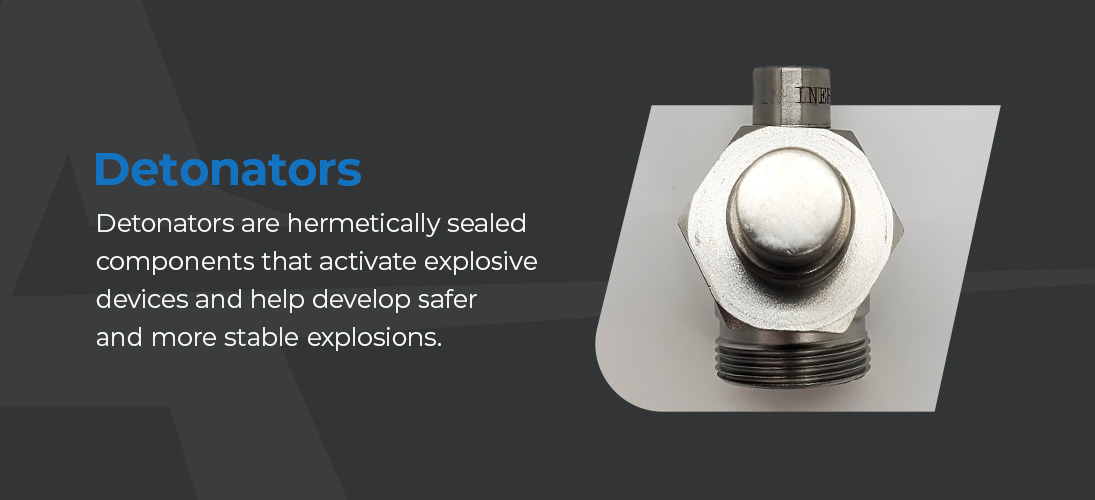
Detonators are hermetically sealed components that activate explosive devices and help develop safer and more stable explosions. An exploding bridgewire (EBW) detonator has two major features — a high-voltage electricity source that provides a fast and consistent starting pulse and a thin wire that makes contact with the explosive device.
The connection between the wire and the voltage source creates a high electric current that instantly melts and vaporizes the wire. The shock and heat from this reaction set off the explosive device.
This type of detonator makes explosive devices more stable and safer, especially in extreme conditions. In addition to EBW detonators, other types include:
- Ordinary detonators with safety fuses.
- Non-electric detonators with shock tubes.
- Instantaneous or delayed electrical detonators.
- Electronic detonators, which are the most precise.
2. Initiators
Electric initiators contain pyrotechnic substances that generate pressure or heat to light materials that are traditionally challenging to ignite, like gas generators, thermal battery systems, safety fuses and propellants. Their composition is similar to that of flash powers but differs in burning speeds and the production of hot particles.
Aircraft initiators are electrically regulated by bridgewires. They usually use fuel and oxidizer agents called “pyrogen” to promote material ignition. Bridgewires are lightweight and compact and function similarly to detonators and blasting cups without generating shock waves. Electric resistance heats the bridgewire, which then activates a heat-producing chemical reaction. Eventually, the bridgewire melts, leaving behind an open circuit.
In emergency ejection systems, initiators may be in the catapult to propel the seat up the rails and out of the aircraft. They are also usually part of the parachute release system.
3. Piston and Cutter Cartridges
Piston pushers, piston pullers and cutters have many applications. In emergency ejection systems, they release parachute lines and facilitate explosions, using the pressure to ignite aircraft initiators.
Pushers and pullers have pins that break once the pressure gets high enough, releasing the ejection seat parachute lines. Cutters have blades instead of pins that are also pressure-activated. The circular blades cut into a disc or valve to detach the lines as the crewmember approaches the ground or if the lines get tangled and they need to deploy a backup.
These cartridges can be set on delay or react in milliseconds, eliminating human error and improving safety.
4. Pyrotechnic Time Delays
Pyrotechnic time delays help time detonation events accurately and precisely. They operate as chemical timers, creating calibrated time delays of milliseconds to several seconds between incoming and outgoing pyrotechnic events.
Time delays have combustion materials that react to standard detonating forces like detonating tips, deflagrating lines or hot gas. They also feature hermetically sealed pyrotechnic cartridge housing that stores a powder-delay composition where the input and output devices meet. Pyrotechnic time delays include small column-insulated delay (SCID) components that use a fuse material in a metal sheath to control the burn rate.
In escape and ejection seats, pyro time delays can help control when parachutes deploy. A parachute delay cutter combines a time-delayed cartridge-actuated device (CAD) and a cutting tool for precise deployment, opening and detachment. Again, this removes the risk of human error and increases safety.
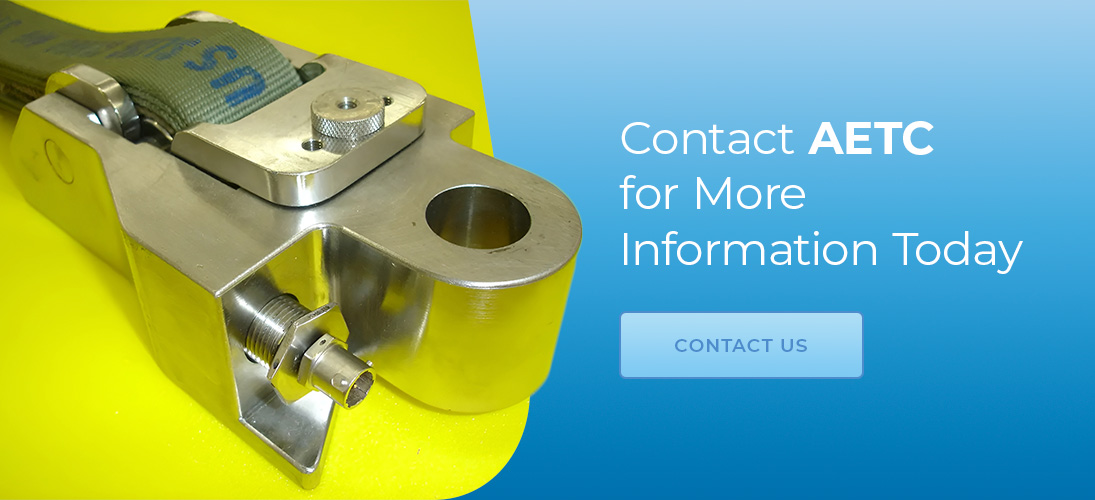
Contact AETC for More Information Today
Aircraft emergency escape and ejection systems are made of multiple complex parts designed to function in a specific sequence. Due to their crucial role, it’s essential to choose reliable and quality components for your aircraft.
AETC has decades of experience and an excellent reputation for designing, developing and manufacturing life-support pyrotechnic and explosive components. We provide high-quality parts with economical pricing and on-time deliveries. We support your commercial aircraft with cartridge-actuated devices and small explosives that make ejection systems possible. Our products are dependable and built to high quality standards.
Contact us now to learn more about our aircraft evacuation system components today!